AMACCUL was founded through a community-led vision for trusted and accessible cooperative finance.
Cooperative reformer · Financial inclusion advocate
Building finance that includes.
I am Ngang Vadex Ngang—a social entrepreneur, researcher and practitioner in responsible innovation, working to make cooperative finance more trusted, practical and accessible to underserved communities.
Institutional leadershipFounder & General Manager, AMACCUL
Professional practice11+ years in cooperative finance
ResearchDoctor of Business Administration candidate
About
Purpose before position.
My work sits where cooperative leadership, inclusive finance, technology and community development meet.
A practitioner shaped by the realities of the field.
More than eleven years of experience across cooperative finance—from volunteering and accounting to branch leadership, institution building and executive management.
I began at the operational heart of cooperative finance. That path taught me that policies only matter when they improve the experience of market traders, farmers, young entrepreneurs and families working toward a more secure future.
I believe finance must be disciplined enough to endure—and human enough to care.
Today, I lead Alamankon Cooperative Credit Union Ltd (AMACCUL), while advancing wider work in group lending, responsible credit, digital transformation, cooperative governance and financial innovation.
I approach research as a practical tool: a way to test assumptions, understand borrower behaviour and build stronger systems for institutions serving communities too often left outside formal finance. My current work includes comparative analysis of group and individual lending methodologies.
Impact in figures
Built from the ground up.
What began with 22 founding members and 44,000 FCFA in registration fees has grown into a cooperative-finance movement connecting thousands of people to trusted financial services.
I registered first with a personal contribution of 2,000 FCFA. Twenty-one other founding members followed, each contributing the same amount.
The combined registration contributions from the 22 founding members provided the institution’s initial financial base.
A growing membership served across an expanding community-based network.
I personally led the establishment of each operational branch. Njombe is currently being developed as the next branch.
Four additional service points are operational, with another location under development.
Supported to open financial accounts and access finance through the group-lending methodology.
Strengthening the operational capability and service culture required for responsible growth.
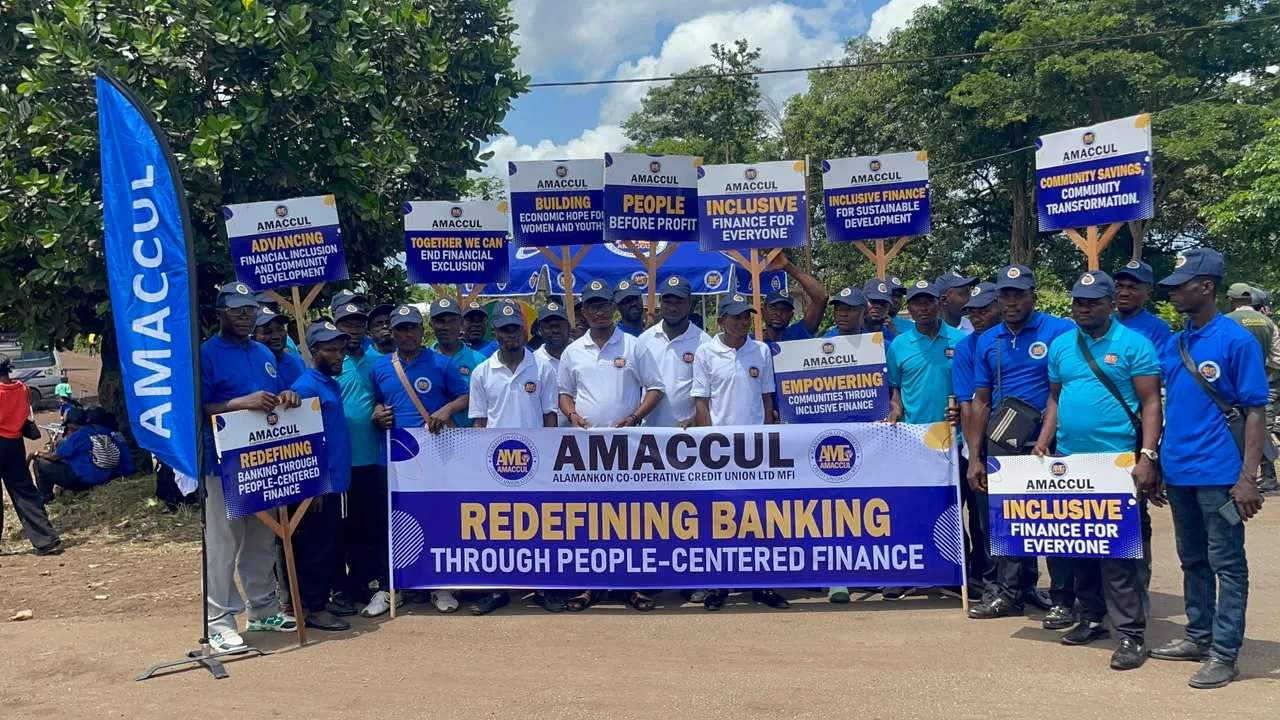

Wheels of Change
A road-transport initiative designed to connect finance with practical livelihood and mobility opportunities.
SF-MEEP
The Smallholder Farmers and Micro-Enterprise Empowerment Program combines two purpose-built credit products with community-based group lending, financial education and practical enterprise-skills development.
Institutional origin
AMACCUL began in Alabukam, North West Region, and was formally launched on 30 April 2017 before beginning full operations on 4 May 2017. The institution and its expanding branch network initially practised individual lending.
Group-lending evolution
I later introduced group lending at AMACCUL after we began exploring additional ways to serve members more effectively. After just over 14 months, the credit union adopted a policy to direct more than 80% of its lending portfolio toward group lending. This is a policy direction, not a claim that the allocation has already been fully achieved.
Impact figures reflect verified institutional records available as of September 2026.Case studies
Ideas tested against reality.
Three examples of how field observations are translated into practical financial-inclusion models, with verified results clearly distinguished from pilot targets and programme ambitions.
Case study 01
Community-Based Group Lending
Moving credit assessment closer to the realities of petty traders, farmers and micro-entrepreneurs.
Established methodology · policy priority
The challenge
Many capable borrowers are excluded because they lack conventional collateral, formal records or a financial history that reflects the strength of their businesses.
The first group
I introduced group lending at AMACCUL with Glorious Sisters, formed at the Kombe Branch Office in the Moungo Chapter. The group brought together five women petty traders and received an initial loan of 750,000 FCFA—150,000 FCFA per member.
How the model expanded
Building on the Kombe experience, the model expanded to Kotto Mission, Matouke and Pendamboko, where new centres were established. It then moved beyond the Moungo to Mbatu in the North West Region, followed by Limbe and Buea in the South West Region, before extending to Mombo in the Moungo.
What the field shows
Access works best when it is paired with proximity, discipline and continuing education—not treated as a one-time loan transaction.
5 womenGlorious Sisters, the first group at Kombe
750,000 FCFAfirst group loan; 150,000 FCFA per member
80%+policy direction for the lending portfolio after 14+ months
Case study 02
Wheels of Change
Testing productive transport as a pathway into dignified youth livelihoods.
Pilot implementation
The challenge
Young people may have the willingness to work but lack the productive asset needed to reach customers, transport goods and generate dependable daily income.
The response
A structured motorcycle-finance model connects asset access with repayment expectations designed around transport earnings and responsible use.
My contribution
I introduced the initiative as a practical link between cooperative finance, youth enterprise and mobility in the Moungo area.
What will be measured
Income stability, repayment performance, asset retention, safety, livelihood continuity and the programme’s ability to scale responsibly.
30motorcycles secured for the pilot phase
300young people in the wider ambition
Pilotimplementation is under way; outcomes are not yet final
Case study 03
SF-MEEP
Combining suitable productive credit, group accountability, financial education and enterprise skills for smallholder farmers and micro-enterprises.
Integrated empowerment model
Adapted meeting rhythm
Rural groups hold formal meetings weekly. Peri-urban and urban groups hold formal meetings monthly, supported by regular field contact and a daily savings option that accommodates the realities of operating a small business.
Two distinct credit products
Smallholder Farmer Credit follows agricultural production and harvest cycles. Micro-Enterprise Credit follows the more frequent cash flow of petty trade, small processing and other eligible micro-enterprises.
The delivery strategy
Community-Based Group Lending remains the principal strategy for collateral-free productive credit, supporting member selection, collective responsibility, peer accountability, savings discipline and repayment performance.
Financial education
Group meetings include practical learning on common small-business mistakes, identifying business opportunities, basic bookkeeping, savings habits and household and enterprise money management.
Economic empowerment
Field teams identify viable local economic opportunities and organise practical skills training—including soap and detergent production and baking—before suitable participants are considered for productive finance.
Responsible pathway to finance
Training does not automatically result in a loan. Financing follows readiness assessment, product suitability, repayment-capacity analysis and the credit union’s established appraisal and approval process.
2distinct credit products
2 rhythmsweekly rural meetings and monthly peri-urban and urban meetings
4 pillarscredit, groups, education and enterprise skills
Evidence note: established results are separated from pilot sizes and programme targets. Figures will be updated as implementation records and outcome data are verified.
Research portfolio
Questions shaped by practice.
My research begins with problems encountered in the field and examines how cooperative finance can become more inclusive without weakening repayment discipline or institutional sustainability. A major current focus is the comparative performance of group and individual lending methodologies.
Doctoral research · In progress
Community-Based Group Lending for Delinquency Reduction and Financial Inclusion
A quantitative study grounded in AMACCUL’s operating experience and the realities of borrowers who are underserved by conventional credit assessment.
Research setting
Alamankon Cooperative Credit Union Ltd and the communities reached through its group-lending operations.
Core question
How can community-based group lending expand financial inclusion while supporting stronger repayment performance?
Analytical focus
Comparative performance of group and individual lending methodologies, borrower characteristics, group dynamics, repayment behaviour, savings discipline and programme participation.
Intended contribution
Actionable evidence for cooperative institutions designing responsible credit for people outside conventional collateral systems.
Artificial intelligence in cooperative finance
Academic research project
Examined the potential applications and implications of artificial intelligence within the cooperative credit sector of North West Cameroon.
Microfinance and women’s economic inclusion
Academic research project
Studied the role of microfinance in supporting women in North West Cameroon in their efforts to address poverty.
Alternative and psychometric credit assessment
Research development
Explored how behavioural and psychometric information might complement traditional credit assessment for economically excluded borrowers.
Publication record: These are research projects and active research streams, not journal publications. Peer-reviewed papers, public reports and approved research outputs will be added here when formally released.
Speaking and training
Teaching where inclusion must happen.
My speaking work is grounded in field practice—helping communities, small-business owners and cooperative teams understand the systems, responsibilities and opportunities behind inclusive finance.
Featured field training
Community-based group lending in practice
Explaining how solidarity, savings discipline, shared responsibility and regular field contact can widen access to finance for people excluded by conventional lending.
Group lendingFinancial educationCommunity mobilisation
Field education
Planting the seeds of group lending
Taking the group-lending conversation directly into communities and answering practical questions before financial commitments are made.
Women’s financial inclusion
Empowerment belongs at the centre
A field message on why the credit union movement must create real economic participation for women rather than treat inclusion as a slogan.
These videos document field teaching and community engagement. Specific event locations and dates will be added when the corresponding records are confirmed.
Field Notes from the Frontline
What the field is teaching me.
Short records from rural, peri-urban and urban communities—documenting the people, problems, experiments and practical lessons shaping my work in inclusive finance.
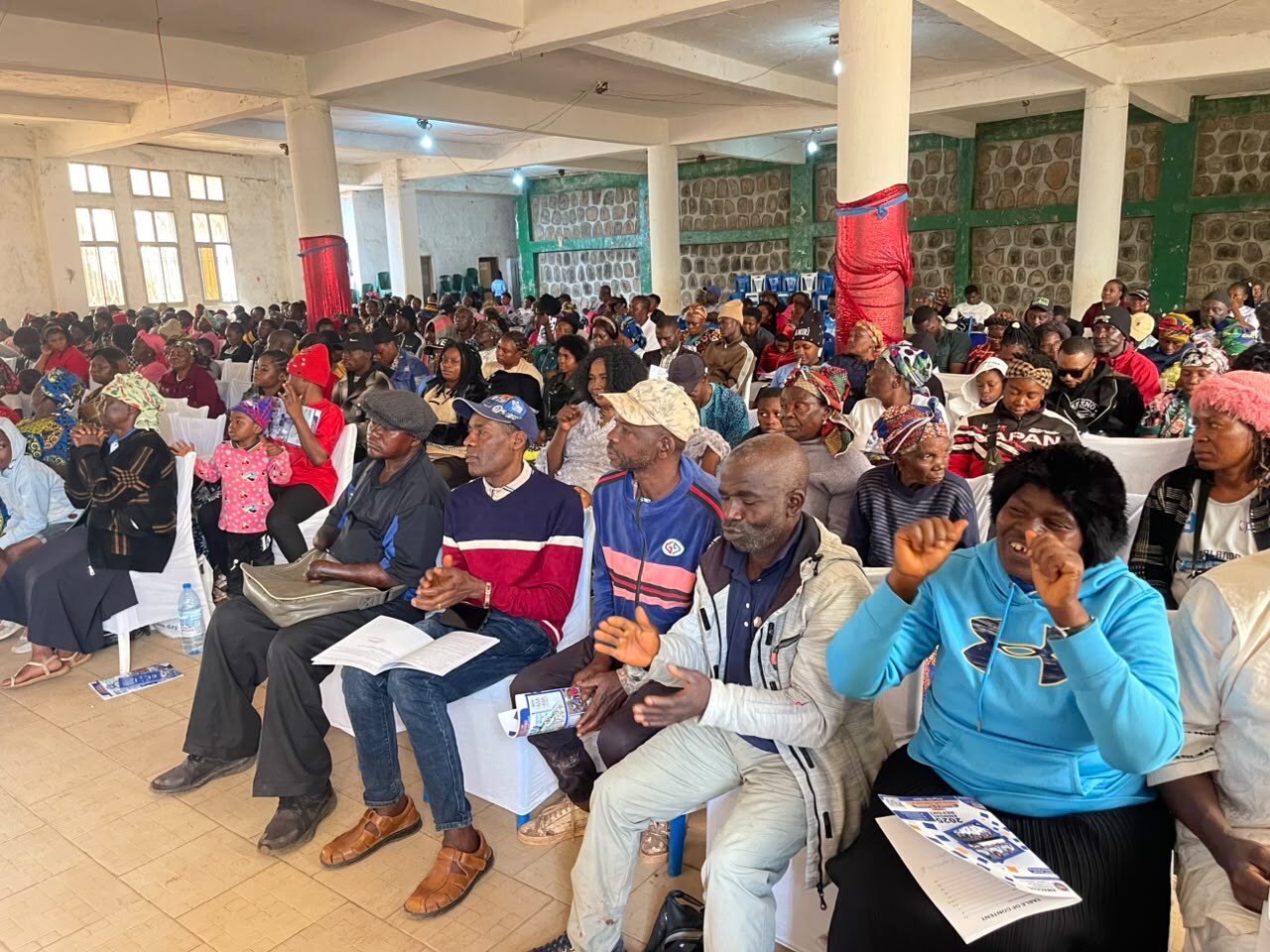
2025 Annual General Meeting
Member governance in action
AMACCUL’s 2025 Annual General Meeting brought members together to participate in the cooperative’s governance, review institutional progress and exercise their rights as owners.
A short cross-section of member attendance at the 2025 AGM.
Twelve groups in one day
I spent five to six hours speaking directly with petty traders and community members about group lending, disciplined savings and the responsibilities that make solidarity finance work.
Field signal: Twelve groups mobilised in a single day.
Building the first centre
Limbe demonstrated that group lending can work in a town when delivery respects members’ business realities: monthly formal group meetings, a daily savings option and regular field contact at shops and market locations. The adapted rhythm complements the weekly meetings used by rural groups.
Practice: Adapt meeting frequency to the operating environment without weakening education, savings discipline, accountability or field engagement.
Mobility as economic infrastructure
Wheels of Change grew from a simple field observation: access to productive transport can determine whether a young person reaches customers, earns consistently and builds a viable livelihood.
Innovation: Connecting responsible finance to transport-led enterprise.
The work continues beyond each visit.
New field notes will combine concise analysis with photographs, participant perspectives and video evidence as the work develops.
Journey
From Alabukam to institution building.
My journey into cooperative reform began with lived experience, developed through frontline service and ultimately inspired me to build a more inclusive model of finance.
Early years · 2009
Education through persistence
I was born into a family of limited means in Alabukam, Mankon. To help meet my school expenses, I worked alongside my parents, grinding garri, selling firewood and making bamboo chairs. I earned my Ordinary Level in 2007 and Advanced Level in 2009. Although financial constraints delayed my university education by one year, they did not diminish my determination to continue.
University · Service
Study, service and the discovery of microfinance
At university, I began by studying Management and later moved towards microfinance as the programme evolved, graduating in Banking and Finance. More than 17 years of service as a Sunday School teacher have also strengthened my communication, patience and mentoring skills, while shaping a people-centred approach to leadership.
Professional foundation
From volunteer to branch manager
After university, I completed a six-month volunteer placement at Ntembeng Cooperative Credit Union. I subsequently progressed from account clerk to head-office accountant and then branch manager. These roles deepened my operational expertise and revealed the persistent gap between the purpose of cooperative finance and its practice within many institutions.
2016–2017
Choosing reform in Alabukam
When repeated recommendations for reform were not adopted, I decided to put my ideas into action. I became AMACCUL’s first registered member by contributing 2,000 FCFA of my own funds, after which 21 other founding members each contributed the same amount. On 29 November 2016, more than 150 people gathered at our family compound in Alabukam, North West Region, for the first community meeting. AMACCUL began there with individual lending and a broader vision: to connect access to finance with practical livelihood development.
Service-model development
Introducing group lending at AMACCUL
Although AMACCUL’s branches were already serving members through individual lending, we continued to explore more inclusive ways to meet their needs. I introduced group lending at the Kombe Branch Office in the Moungo Chapter through Glorious Sisters, a group of five women petty traders. From Kombe, I guided the model’s expansion to Kotto Mission, Matouke, Pendamboko, Mbatu, Limbe, Buea and Mombo. Within just over 14 months, the credit union adopted a policy to allocate more than 80% of its loan portfolio to group lending.
Institutional expansion
Building branches from the field
I personally led the establishment of AMACCUL’s eight operational branches: Alabukam, Ntsualam, Bamenda Old Treasury Street, Limbe, Douala (Bonaberi), Buea, Mombo and Kombe. My approach has always been hands-on: I relocate to each town, work directly in the field, establish the operational systems and train staff until the branch is fully operational. Njombe is currently being developed as the next branch.
Today
Practitioner, leader and researcher
Today, I bring together field experience, institutional leadership, doctoral research, entrepreneurship and responsible innovation to advance a more inclusive future for finance.
Education
Practice, strengthened by study.
A multidisciplinary academic path spanning finance, entrepreneurship, innovation, research and artificial intelligence.
Doctor of Business Administration (DBA) candidate
Universidad Católica de Murcia (UCAM), Spain
AI Agents for Business Applications
McCombs School of Business, The University of Texas at Austin
Innovation and Entrepreneurship
Guglielmo Marconi University, Italy
Banking and Finance
Catholic University of Cameroon, Bamenda
Professional documents
Download the international CV or the media-ready professional biography with verified impact, current focus and contact details.
Institutional establishment and advisory
From concept to operational readiness.
I provide practical consultation and training for promoters, cooperatives and organisations seeking to establish or strengthen microfinance and cooperative-finance institutions.
Feasibility and regulatory roadmap
Initial assessment of the concept, proposed structure, target market, capital considerations, compliance requirements, risks and implementation pathway.
Documentation and registration support
Compilation and review of application documents, governance materials, business plans, operating policies and follow-up with the relevant authorities.
Business strategy and product design
Fine-tuning the mission, market position, service-delivery model, savings and loan products, pricing, growth priorities and sustainability plan.
Chart of accounts and internal controls
Designing the general-ledger structure, product mappings, approval limits, maker-checker controls, cash procedures and management-reporting framework.
Software selection and implementation
Vendor-neutral assessment of core-banking requirements, system comparisons, role and permission design, configuration guidance, testing and staff preparation.
Office setup and equipment advisory
Cost-effective recommendations for branch layout, customer flow, workstations, networking, power backup, cash security, records and training equipment.
A disciplined engagement pathway
Stage 1Paid diagnostic consultation
Stage 2Roadmap and agreed scope
Stage 3Implementation, training and testing
Stage 4Launch and post-opening support
Scope and regulatory responsibility: Advisory support does not guarantee regulatory approval. Applications remain subject to the requirements and decisions of the relevant authorities. Qualified legal, accounting or audit professionals are engaged where formal certification is required.
Request a consultationProfessional development
Learning grounded in real practice.
I support emerging professionals who want practical exposure to cooperative finance, financial inclusion, research, entrepreneurship and institution building.
Paid professional internships
Supervised, paid placements that connect academic knowledge with meaningful professional responsibilities and field-based learning.
Mentorship
Focused guidance for students, early-career professionals and social entrepreneurs as they clarify their direction, strengthen professional discipline and develop practical leadership capacity.
Training and capacity building
Practical learning engagements for individuals, teams and institutions working in cooperative finance, inclusive credit and community development.
Expression of interest: Opportunities are considered according to programme capacity, learning objectives and professional fit. Applicants should introduce themselves, explain their area of interest and state what they hope to learn or contribute.
Submit an enquiryLet’s build institutions that people can believe in.
I welcome enquiries about institutional establishment and advisory engagements, cooperative reform, financial inclusion, applied research, responsible innovation, capacity building, speaking engagements, paid professional internships and mentorship.
For professional enquiries, email or the enquiry form is preferred. WhatsApp is available for brief follow-up communication.